Wednesday 19 August 2026
Holcombe Moor National Trust Guided Walk and Talk.
Fifteen walkers set out on a circular walk from Greenmount to Holcombe Moor and back via Larkhill and Hawkshaw.
We walked down Holhouse Lane to access the path up past Holhouse Farm, across Bolton Road and along Redisher Lane to Redisher Wood. After crossing the footbridge, we followed the second path on the right, a steep muddy ascent through the wood before traversing across the fields along the edge of the danger area, then following the path round to the right and up to the gate on Moorbottom Road. We turned left to follow the track, then took the steep uneven path on the right to ascend Holcombe Moor up to Pilgrims’ Cross. We continued to follow the path north-west up to the Trig Point on Bull Hill where we had our morning break before meeting Nick Taylor, the National Trust ranger.
Nick took us across Holcombe Moor to Wet Moss, towards Alden Breaks and back across Scholes Height before finishing at the boundary fence at the end of the stone footpath. Despite the change to inclement weather, we were all captivated by Nick’s passion, enthusiasm and knowledge. He told us about the ongoing project to increase carbon capture and storage, improve natural flood management and wildlife habitats, and establish a long-term monitoring programme to assess progress.
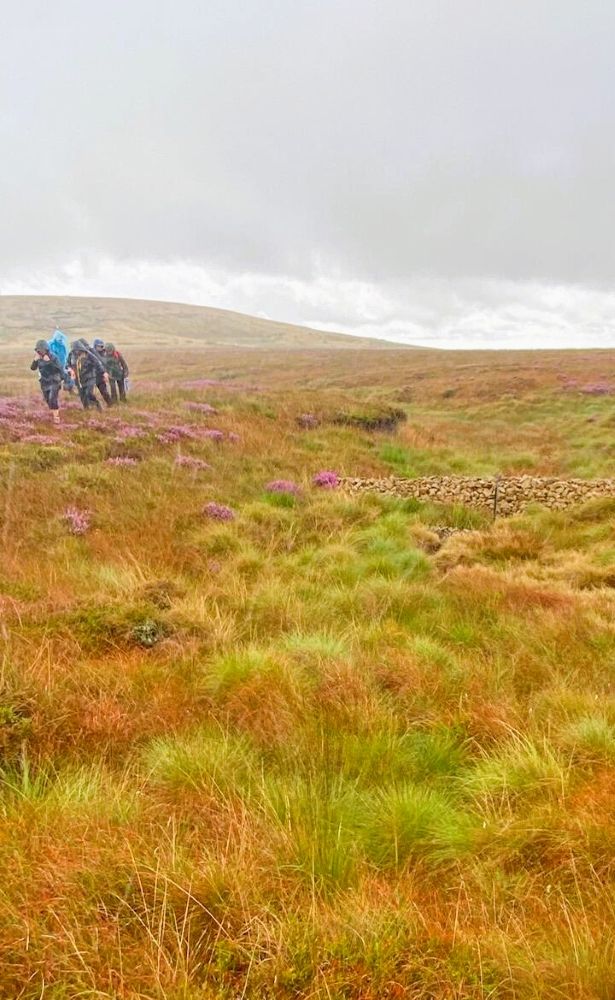
Heading across the moor
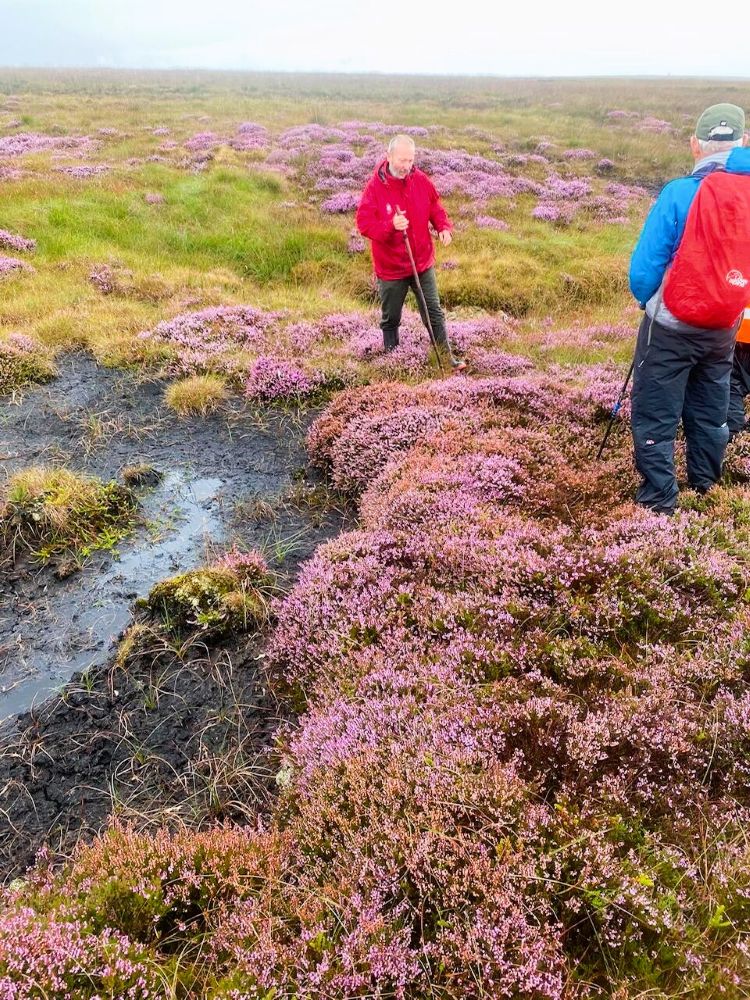
Nick’s talk
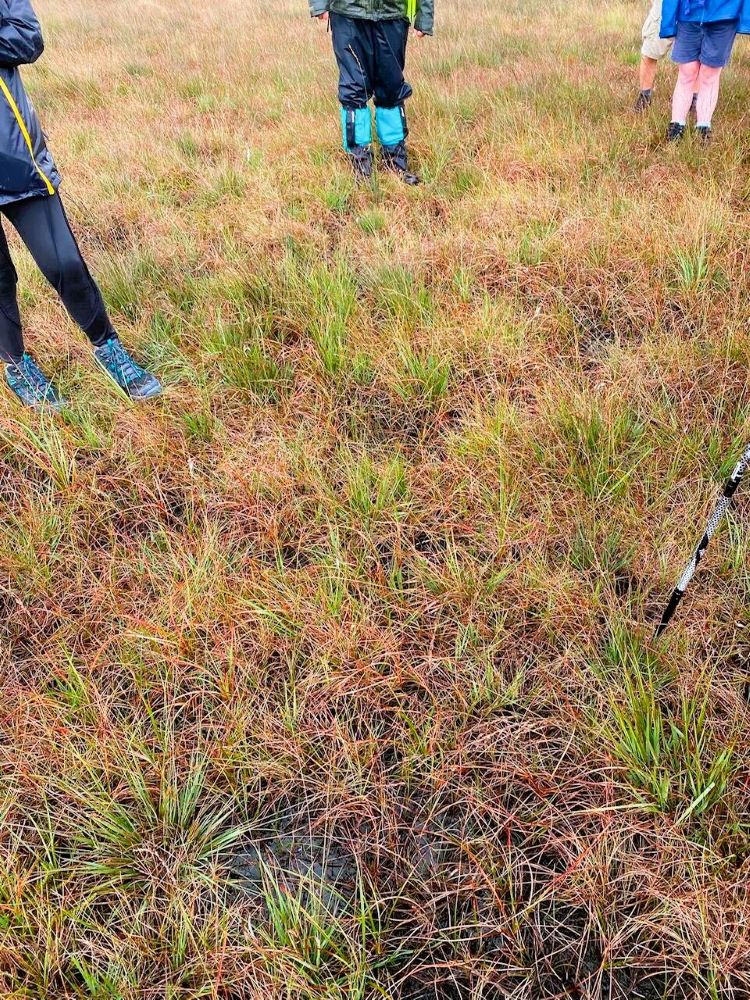
Progress made
The moorland has been significantly damaged by the impact of the Industrial Revolution, wildfires, overgrazing and erosion from wind and rain, resulting in a dry and exposed peat surface with limited vegetation cover, reducing valuable habitat for a wide variety of wildlife including breeding birds. We saw the stone and peat dams built as preventative measures to help to slow water movement during high rainfall and keep water on the peatland for longer, and reducing the risk of flooding further downstream. We learned that over a million plugs of sphagnum moss have been planted as a vital part of peatland restoration, providing a protective layer over exposed peat by helping to restore the peatland to a fully functioning bog, eventually creating a carbon sink. Nik demonstrated how sphagnum moss holds between ten and twenty times its own weight in water and how that compared to other mosses. We saw how gully sides have been eroded and the work to change the slope of these areas to stabilise the soil to allow re-establishment of upland grasses to provide a protective layer. Those of us who had been on the walk the previous year were able to see the improvements that had been made already in the increased vegetation and regrowth of heather, and the impact of the peat bunds in the expanding amount of sphagnum moss. We thanked Nik for his time and for captivating us with his inspiring talk and for answering all our questions.
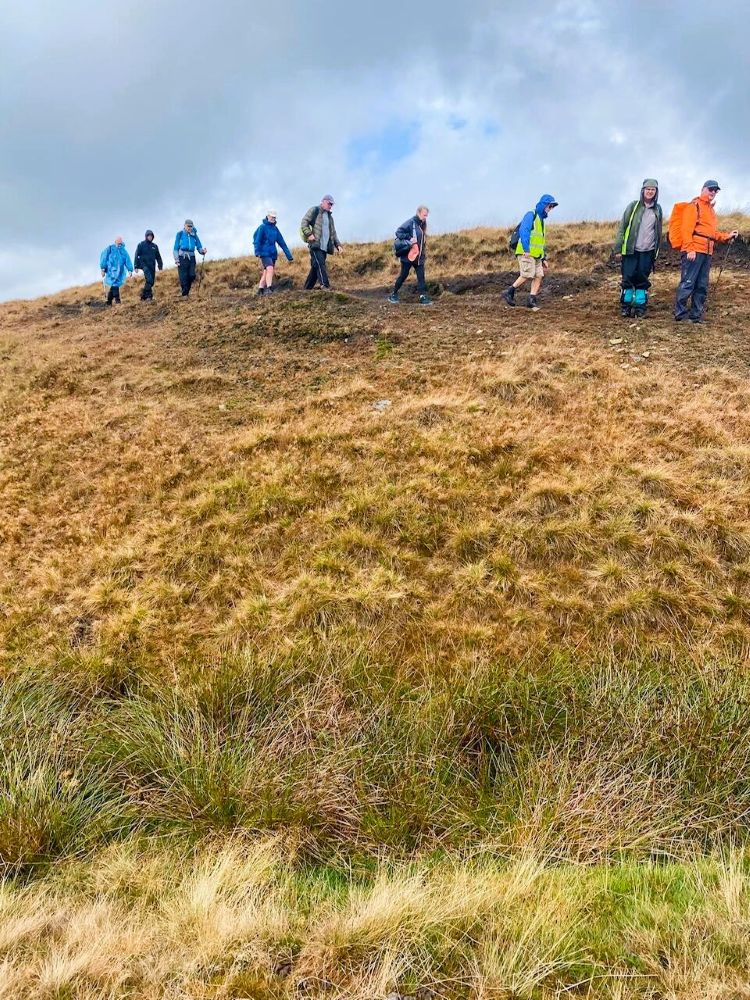
Homeward bound
As the rain stopped, we turned left and continued to follow the path southwards on Quarlton Heights before descending the steep path at Lark Hill over the stile and down to the ruined buildings where we had our lunch in the sunshine. Following our break we followed the paths south to Hawkshaw Lane, turning left at the cottages then down through the fields to Higher House Farm. We turned left in the farmyard to head towards the training camp, then Simons Farm where we turned right then left to follow the tracks and paths south past Hollingrove Farm and back to Bolton Road. Turning left, we then crossed the road to take the path through the fields and along the side of the golf course and back to Greenmount Old School, having completed a varied route and enjoyed an inspiring walk and talk, covering a distance of around 11 miles in sun, rain and hail, ending in warm sunshine.